Institutional knowledge advanced.
Scirevance is a knowledge and decision intelligence cognitive layer enabled by AI, transforming unstructured information into evidence-grounded meaning, relationships, understanding, and insight for better decisions.
One inherent problem.
Two audiences. Two approaches.
One platform.
A private, practical workspace for meaning extraction
A low-cost standalone meaning-extraction workspace for journalists, independent researchers, solo practitioners, activists, students, not-for-profit organizations, NGOs, and consultants who need private, practical tools for extracting meaning from documents, interviews, notes, and case materials — and are cost sensitive.
A governed, scalable knowledge and decision intelligence layer
An enterprise knowledge and decision intelligence layer for organizations that need governed, scalable, evidence-grounded intelligence integrated with internal systems, workflows, and institutional memory. Governance is foundational — not an afterthought.
Systems of record can show what happened and when. They rarely capture why a decision was made, what assumptions shaped it, which relationships mattered, and what evidence informed the judgment.
How Scirevance solves itDepartures take not only knowledge, but reasoning patterns, contextual judgment, and lived decision logic significantly affecting the bottom line.
Critical intelligence is buried across documents, communications, tacit employee knowledge and fragmented workflows. Knowledge workers waste 15% of their day searching for information or the coworkers who know the answer or where it is.
Answers are only useful when tied back to organizational evidence and context.
Scirevance is an enterprise knowledge and decision intelligence cognitive layer that transforms fragmented organizational information into a connected, queryable, evidence-grounded intelligence environment. By structuring meaning across documents, systems, communications, and expert knowledge, Scirevance helps organizations surface context, relationships, chronology, arguments, and decision rationale at scale. Teams use Scirevance to reduce knowledge loss, strengthen judgment, accelerate insight, and build on institutional intelligence rather than rediscover it. Individuals use it to understand meaning.
Five capabilities.
One intelligent layer.
Everything traditional knowledge management missed, built into a single cognitive platform.
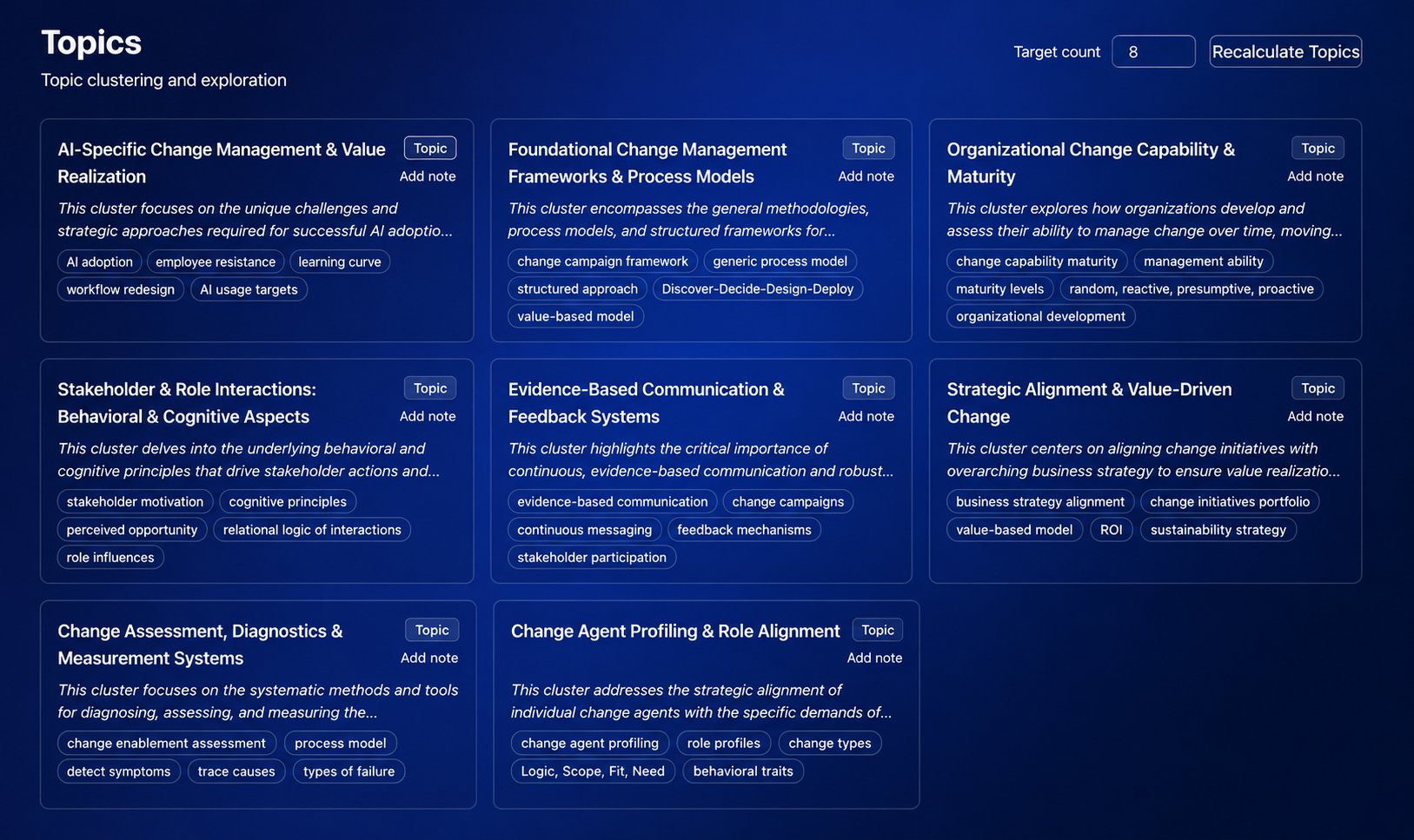
Full feature overview →Transform documents, communications, notes, and other unstructured inputs into entities, themes, arguments, speaker patterns, chronology, and evidence trails.
Explore relationship networks, communication patterns, timeline views, semantic clusters, and other visual structures that make complex organizational meaning easier to understand.
Connect annotations, evidence, documents, and interpretations into structured reasoning, presentation-ready narratives, and decision support artifacts.
Use AI-enabled questioning, summarization, and synthesis against approved source material, with answers linked back to traceable evidence.
Preserve not only documents, but the reasoning, context, assumptions, and organizational learning that would otherwise disappear through turnover or fragmentation.
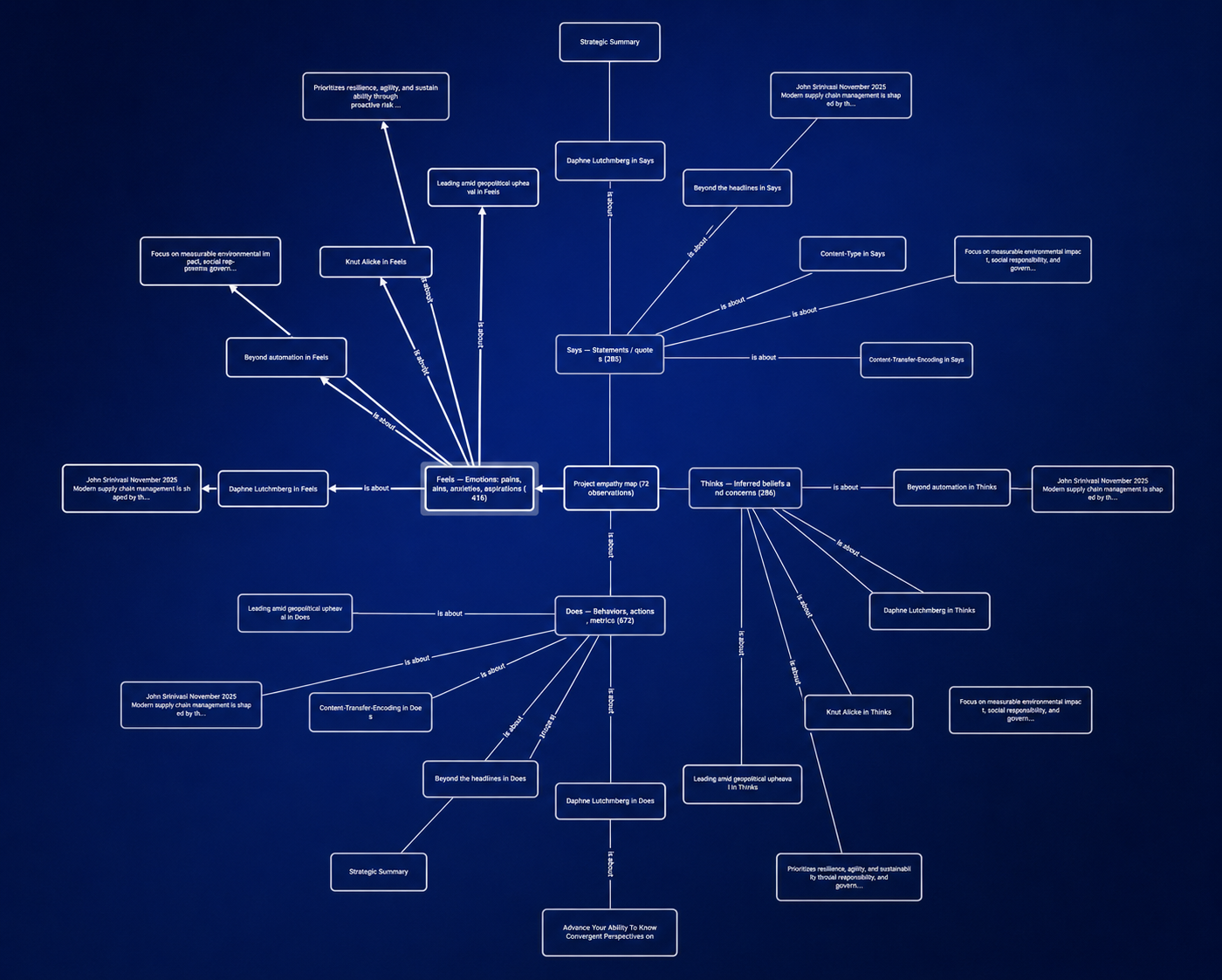
See the relationships, patterns, and decision context hidden in complex information
Scirevance converts fragmented enterprise content into visual intelligence environments such as relationship maps, communication patterns, semantic clusters, and decision chronologies so complex meaning becomes visible, explainable, and actionable.
- Relationship and entity mapping across people, topics, decisions, and sources
- Communication and interaction analysis to reveal patterns, bias, exclusions, and influence
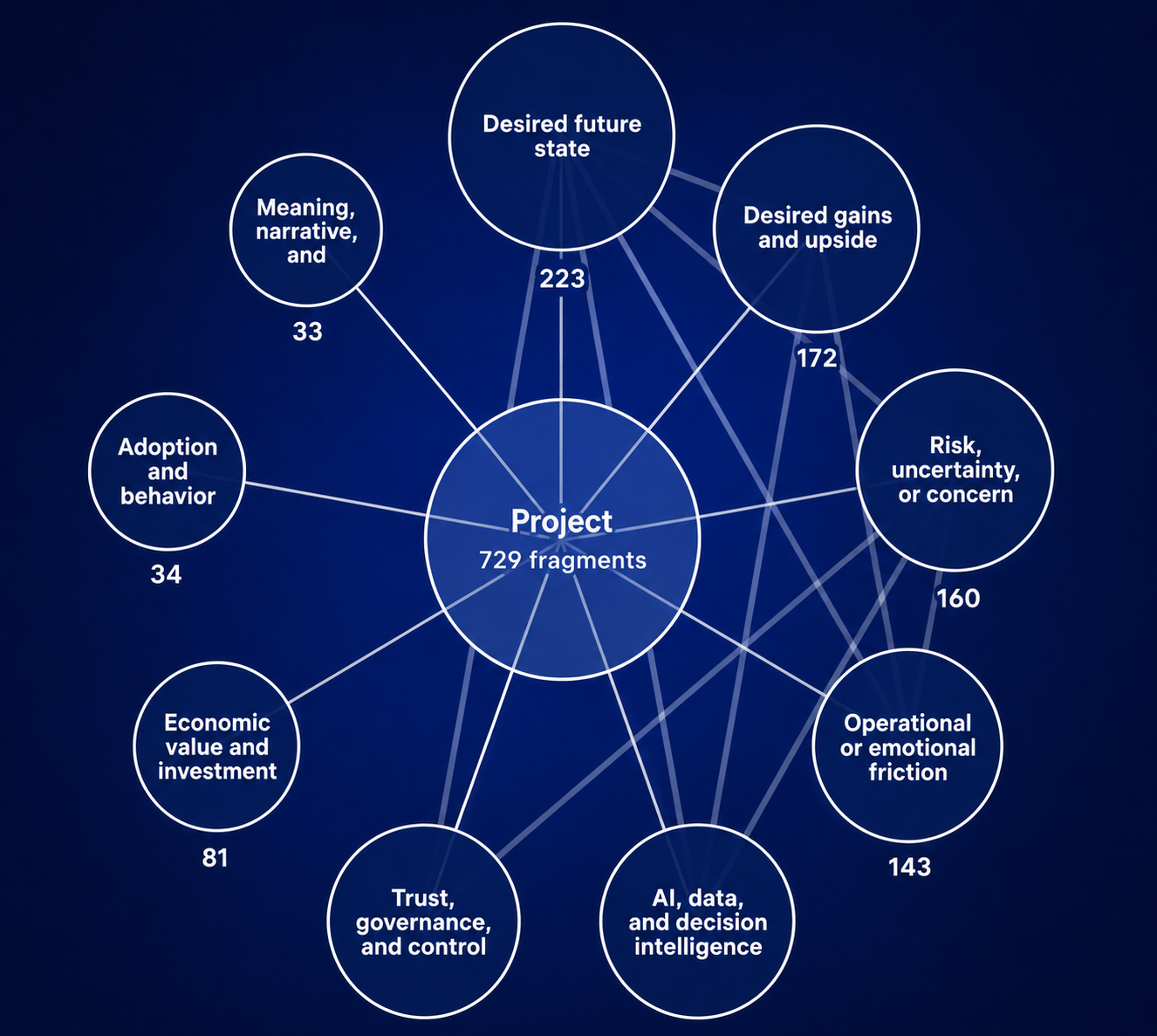
- Semantic clustering and language pattern views across documents and collections
- Chronology construction from explicit and contextual references
Ask questions against your knowledge base, not the open internet unless you want to
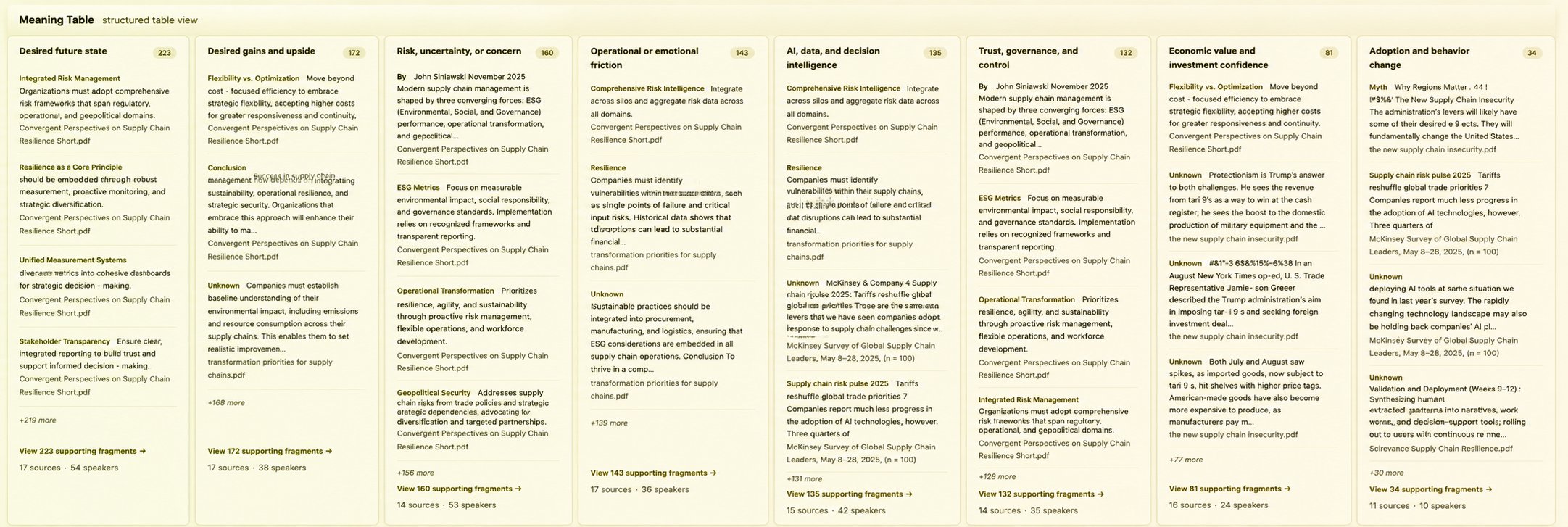
Scirevance uses AI to support search, synthesis, and question answering within your curated knowledge environment. Responses are grounded in ingested source material and linked back to traceable evidence so users can verify what supports each answer.
- Natural-language questioning across ingested documents, notes, and sources
- Source-linked responses with evidence traceability
- Grounded answers constrained to approved knowledge environments
- Role-based access and permissions for governed use
Knowledge continuity through personnel transitions — reasoning, context, and decision logic preserved, not lost.
Faster time-to-insight through connected meaning and evidence — less searching, more understanding.
Reduction in duplicated analysis and rediscovery work — build on what your organization already knows.
Built for every knowledge-
intensive sector
Build on prior engagements, retain client and project intelligence, and accelerate onboarding with full contextual history.
Structure interviews, source materials, research notes, and document collections into searchable meaning for faster, deeper reporting and analysis.
Capture process knowledge, engineering rationale, and operational expertise before it walks out the door with experienced staff.
Connect cross-study patterns, preserve experimental rationale, accelerate discovery.
Unlock investment intelligence from unstructured documents and historical decision rationale.
Centralize regulatory data, audit trails, and compliance history in one intelligent hub.
Add a cognitive intelligence layer on top of existing IT management systems—contextualizing asset behavior, surfacing dependencies, predicting risks, and preserving the reasoning behind decisions.
Organize campaign intelligence, preserve the institutional memory of movements, and connect evidence across issues, stakeholders, and time to drive more effective advocacy and systemic change.
Preserve case reasoning, connect evidence trails, and retain strategic insight through transitions.

"The organizations that will win the next decade are not the ones with the most data — they're the ones who transform it into wisdom that survives every transition."
Knowledge preserved through personnel transitions
Faster time-to-insight versus conventional tools
Reduction in duplicated research across teams
What knowledge leaders are saying.
Ready to build on knowledge,
not assumptions?
Request a personalized demo. We'll walk through Scirevance with content and use cases relevant to your specific industry and knowledge challenges.